Thursday, March 8, 2012

Asparagus-Zucchini-Spinach Puree


As a spread on a sandwich 


The New Scenic Cafe north of Duluth wowed me once again on Tuesday!  Not only do they cheerfully accommodate my need for pureed food, but the chef willingly shares the approximate measurements of the ingredients he uses to make the new creation so that I can try to replicate it. He views it as a fun challenge, using whatever ingredients he has available.  He pureed asparagus, zucchini and spinach together with shallots and garlic to create a thin spread to put on shredded roasted chicken atop a toasted baguette.  Using the information he provided, today I made a puree that tasted quite close to what he had made.  I made a much larger batch than he did, so that I can have more another day.  This puree could be used in a variety of ways - as a spread on a sandwich, as a sauce for pasta, or thinned with broth to make a soup.  The possibilities are as vast as your Pzazz. 


Making this puree was doubly fun today.  First, because my friend was here to join me.  Second, because she brought her VitaMix for me to try.  I was skeptical that it couldn't do anything that the appliances I already have couldn't do.  Well, I was wrong. WOWZA!  It was fast, it was quiet, it was efficient pulverizing the vegetables to the desired consistency, and it was easy to clean.   Tom had purchased one for me at Sam's Club a couple of weeks ago, but I hadn't even taken it out of the box yet, thinking it was incredibly indulgent to buy it and had planned to return it. My friend offered to let me try hers before I returned mine.  Hmmmmm.... our 30 year old food processor has only one feature that still works and our blender needs more liquid than desirable to easily make spreads or pureed dips, limiting how I can use it.  Hmmmmmmm....pureed food is my required diet.  Time to rethink my initial decision.  Sam (our 18 year old son) does love to make fruit smoothies in the summer and neither our blender or food processor can chop ice.  So I wouldn't be entirely selfish, would I?   


Ingredients:
1/2 Tablespoon coconut oil (or olive oil)
As a soup
4 Tablespoons chopped shallot                    
2 teaspoons chopped garlic
1 cup chopped asparagus
2 cups chopped zucchini
1 1/3 cup fresh spinach
1/2  Tablespoon coconut oil (or olive oil)
Sea salt and pepper to taste


Preparation:
Heat the 1/2 tablespoon of oil over medium heat and saute the shallot, garlic, asparagus and zucchini until tender.  Put it all in the VitaMix and add the fresh spinach and remaining oil and be amazed as you watch it turn a vibrant, silky green!

Nutrition:  (using coconut oil rather than olive oil)
Servings per recipe: 3
Serving Size: 1/2 cup
Calories: 84
Total Fat: 5 g
Cholesterol: 0 mg
Sodium: 17 mg
Total Carbs: 10 g
Dietary Fiber: 3 g
Protein: 3 g

Tuesday, March 6, 2012

Beans and Greens Soup


White Bean and Kale Soup (Beans and Greens) 


During the first week following my monthly injection of Octreotide, I need to increase my intake of pureed fiber, particularly food like hummus or bean dips. (Believe me, you don't want to know all of the medical details regarding why this is necessary.)    


But one day last week I was weary of the several varieties of hummus and white bean dips I had consumed and stood with the refrigerator door open for far too long looking for something to satisfy my palate as well as my dietary needs.  Then it came to me.  


I had a small amount of kale in the crisper and had some cooked white beans that I hadn't used for making dip.  I have seen several recipes for kale and white bean soups, but had never ventured to make a pureed soup with those ingredients.  The challenge was on.  What proportions and herbs would yield a creamy, healthy, fiber-filled delectable pureed soup?  Following my culinary instincts, I started chopping, mixing, and measuring....quickly, because I was getting hungry. The resulting soup was nutritionally dense, creamy but low-fat, and yes, definitely tasty. When Tom walked into the house, he asked what I had made that smelled so delicious.  Pzazz!  


Just a quick side-note:   If you use canned white beans rather than cooking your own, choose a brand, such as Eden Organic, whose cans contain no bisphenol-A in the can linings.  


Kale
Ingredients:
2 cups cooked white cannellini beans
2 cups chopped kale (tough stems removed)            
1 cup low-sodium vegetable broth
1/2 - 3/4 cup water
1/2  - 1 teaspoon finely chopped fresh rosemary

Preparation:
Cook the kale in the broth until tender.  Add the cooked white beans and rosemary. Simmer until thoroughly heated.  Puree with an immersion blender in a deep container, or puree in a blender.  If a thinner consistency is desired, add a bit more broth or water.  Season with just a bit of sea salt.  (Did you know that typical table salt is bleached, but sea salt isn't.  Sea salt is garnered from the natural evaporation of seawater.  It's far healthier than common iodized table salt and contains more than eighty valuable trace minerals.  Have fun trying the many varieties of sea salt available, each imparting a unique flavor. Tom is my household "expert" on sea salt and he has introduced me to a vast array of fascinating sea salts,)


Simmering soup


Nutrition:
Servings per recipe: 3
Serving Size: A generous 1 cup
Calories: 163
Total Fat: 2 g
Cholesterol: 0 mg
Sodium: 120 mg
Total Carbs: 29 g
Dietary Fiber: 9 g
Protein: 10 g

Sunday, March 4, 2012

Carrot Parsnip Puree


How can something this naturally sweet be so incredibly nutritious!  I must have taken 50 photos of this puree in an attempt to make the photo look as delicious as the puree tasted, when I realized I simply don't have that caliber of photography ability.   So, please, please, try this wonderfully nutritious and delightful puree. You won't be disappointed.  It passed Tom's Taste Test with flying colors!


As I mentioned at the beginning, the puree is a nutritional powerhouse, too.  Carrots are an excellent source of antioxidant beta-carotene, which is linked to reducing the risk of cancer, heart attacks, and cataracts.  Other vitamins, minerals and enzymes in carrots support liver, digestive and kidney function, according to Rebecca Katz, author of One Bite At A Time - Nourishing Recipes for Cancer Survivors and Their Friends.  (If you haven't seen this cookbook, I highly recommend it.) And parsnips provide an excellent source of vitamin C, fiber, folic acid, pantothenic acid, and manganese.  


The recipe I devised is a compilation of several I found online, looking for ways to use up two lone parsnips in the crisper section of my refrigerator.  Oh, the beauty of forced creativity.  


Ingredients in soup pot


Ingredients:
1 Tablespoon coconut oil
(or olive oil or butter if you don't need coconut oil)
1 cup peeled and sliced parsnips
2 cups peeled and chopped carrots
2 garlic cloves
1/2 medium onion, chopped (about 1/2 cup chopped)
1/2 cup reduced-sodium chicken broth
1/2 cup water


Preparation:
Melt coconut oil in a soup pot.  Chop all vegetables and add to the oil.  Saute for about 5 minutes over medium heat.  Add broth and water.  Bring to a boil.  Then reduce heat and simmer with a cover on the pot until the vegetables are tender, about 30 minutes.  Puree with an immersion blender.  This will make a puree that can be used as a side dish or you can add some more broth and use as a soup.  Garnish with a sprig of fresh cilantro.

Starting to puree with immersion blender


Nutrition:
Servings per recipe: 3
Pureed with immersion blender
Serving Size: 1 cup                                                      
Calories: 127
Total Fat: 5 g
Cholesterol: 0  mg
Sodium: 161 mg
Total Carbs: 20 g
Dietary Fiber: 5 g
Protein: 2 g

Sunday, February 26, 2012

Caring for Carcinoid Foundation


When I was diagnosed with my first tumor in 1998, I knew virtually nothing about the pancreas or the various types of pancreatic tumors.  I only knew that somehow a 14 cm tumor had grown on the tail of my pancreas and that it seriously threatened my life.  


Since that time, I have tried to learn all that I can about my particular type of cancer, which is a pancreatic neuroendocrine tumor (PNET).  Pancreatic neuroendocrine tumors (PNETs) are diagnosed in only  0.3 - 0.4 out of every 100,000 people each year ( Yao et al, 2008). Steve Jobs, founder of Apple, had a pancreatic neuroendocrine tumor and died from it recently.


A resource that I discovered in  October, 2011 that has been enormously helpful in my quest for current information about pancreatic neuroendocrine tumors is the Caring for Carcinoid Foundation.  This organization is the only foundation dedicated to raising research funds for neuroendocrine tumors and providing information to individuals diagnosed with this rare disease.  


You might be wondering what the term "carcinoid" means and how it relates to my type of tumor. A neuroendocrine tumor can develop anywhere in the body that there are neuroendocrine cells. See the Caring for Carcinoid Foundation website for more information about these types of cells if you are interested. But in the simplest terms, neuroendocrine cells are the connectors between the endocrine system and the nervous system. The most common places for neuroendocrine tumors to begin are in the lungs, appendix, small intestine, and pancreas. Neuroendocrine tumors that start in the pancreas are classified as pancreatic neuroendocrine tumors (PNETs) or islet cell tumors.  When neuroendocrine tumors start in other places in the body, they are usually classified as carcinoid tumors.  PNETs and carcinoid tumors are both typically slow-growing tumors and both have the capability to secrete hormones.  


The only similarity between pancreatic neuroendocrine tumors (PNETs) and typical pancreatic cancer (which is called pancreatic exocrine cancer) is that they both start in the pancreas.  But the diagnosis, treatments and outcomes are vastly different. 


The Caring for Carcinoid Foundation has been an immensely helpful resource for me to stay current about treatments and research for this extremely rare disorder.  I encourage you to visit their website to find out more about this type of cancer and how you might help in raising funds for research. It is a unique organization because it directs 100% of all individual donations to breakthrough research.  It also provides hope and encouragement for anyone diagnosed with pancreatic neuroendocrine cancer.  The logo for their organization is a sunflower, bursting with hope and beauty.  


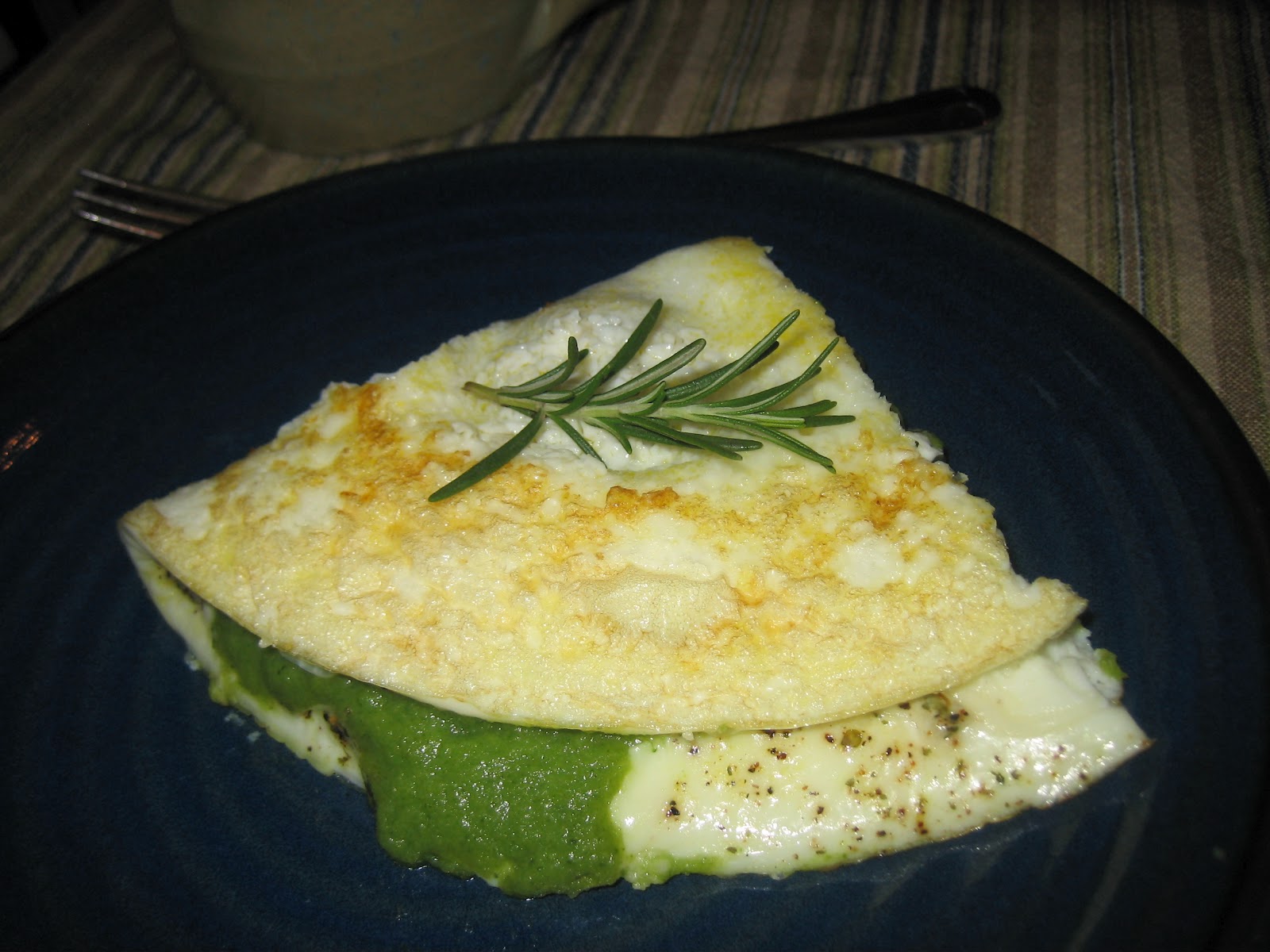
Broccoli Filled Omelet

Broccoli Filled Omelet


Yesterday I cooked frozen broccoli florets in the microwave, using a minimal amount of water.  Then I added some broth to a portion of it and pureed it to make a simple broccoli soup and enjoyed it for supper.  I saved the remaining portion to use in my egg-white omelet this morning, because it was thick enough to use as a filling. I simply added about 1/4 teaspoon of  Mrs. Dash Tomato-Basil-Garlic Seasoning Blend to liven it up a bit.  Simple, quick and nutritious.  


Ingredients:
1 cup frozen broccoli florets
3 Tablespoons water
1/4 teaspoon Mrs. Dash Tomato-Basil-Garlic Seasoning Blend  

4 Egg whites
1 Tablespoon grated Parmesan cheese

Preparation:
To prepare the broccoli filling, cook the broccoli in the water until tender, either in the microwave or in a pan on the stove. Cool a bit, then puree to desired consistency. Add Mrs. Dash seasoning.  To prepare the omelet, whisk the egg whites with a small amount of water (about 1 Tablespoon) to fluff it up. (Season the egg whites as desired.)  Coat a pan with non-stick spray and place on medium heat.  Pour in the egg white mixture. Put a lid on the pan and cook until the eggs are nearly cooked. Sprinkle the Parmesan cheese onto the eggs.  Spread the broccoli mixture on one half of the eggs.  Cover again and cook until done. Fold the omelet in half. Slide it onto a cutting surface and cut into two portions.  Garnish each with a sprig of rosemary or thyme.


Nutrition:
Servings per recipe: 2 
Serving Size:  Half of the omelet                         
Calories: 62
Total Fat: 1 g
Cholesterol: 0 mg
Sodium: 177  mg
Total Carbs: 2  g
Dietary Fiber: 1 g
Protein: 13 g

Saturday, February 25, 2012

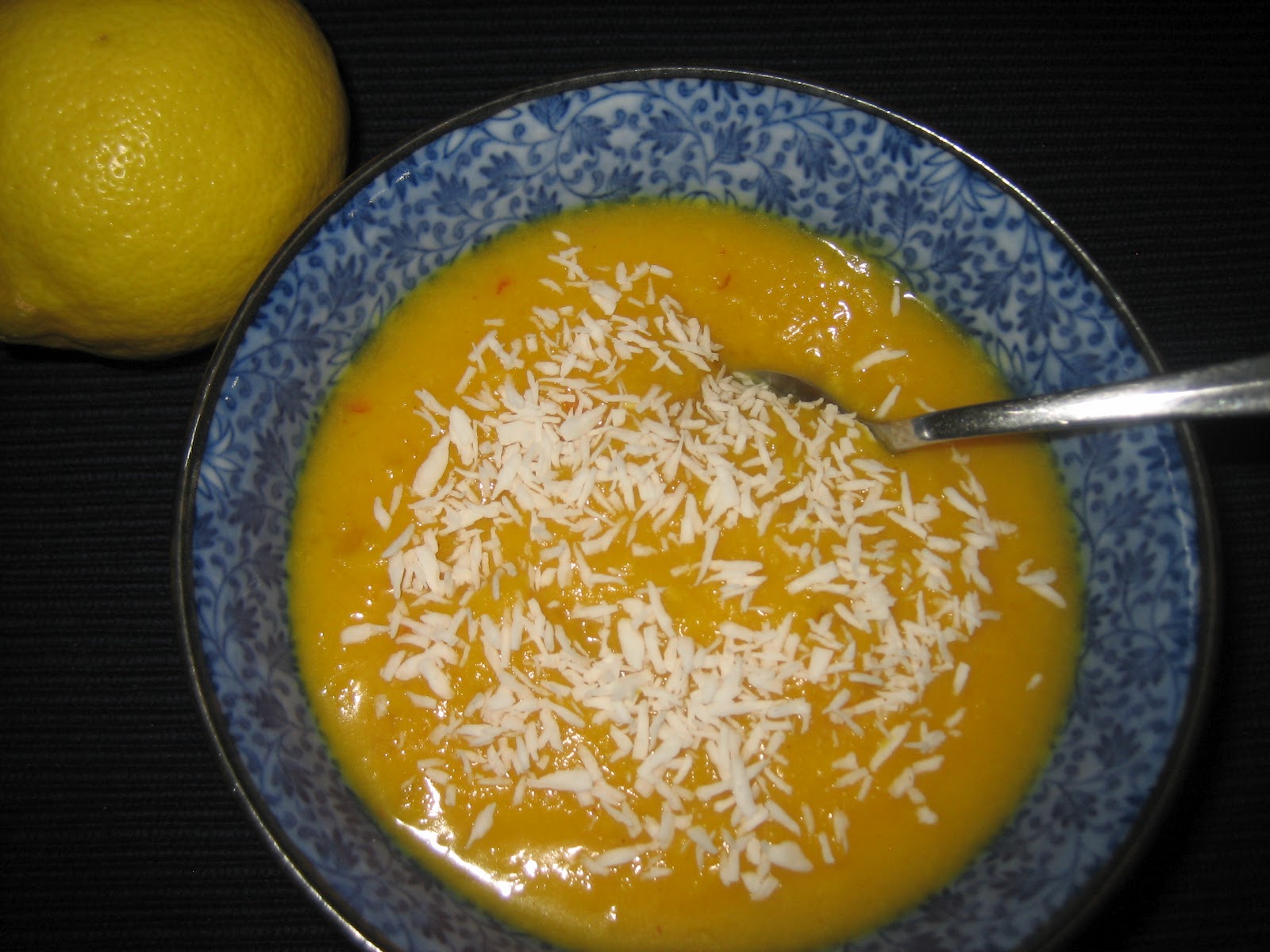
Spicy Butternut Squash Coconut Soup

Spicy Butternut Squash Coconut Soup


Just when I thought I had exhausted all of the possible butternut squash soup recipes, I found another one that I tweaked to fit my needs and tastes, and wowza!  It all started so innocently.  A local store was selling peeled, seeded,  and cubed butternut squash.  The thought of not needing to prep the squash was insanely appealing to me.  Preparing my food requires most of my energy some days, and any step that can make it easier is worth it for me. 


The original recipe is from Soup Bible (Penguin Books, 2007) and included coconut cream as an ingredient.  My friend's mother has used coconut cream and coconut oil consistently for decades and when she learned a couple of years ago that coconut oil was recommended to me as a highly digestible fat, she shared a jar of her coconut cream concentrate with me.  (I know, I know...I still haven't made a post about the merits of coconut oil for people with pancreatic insufficiency.  I promise to get to that soon.) I have enjoyed coconut cream just as a spread on toast, but had never tried it in a recipe, so was glad to find this squash soup recipe.  Absolutely delicious!!! Since the product that I had was coconut cream concentrate, I adjusted the recipe accordingly.  Also, the original recipe used sweet chili sauce and I used Thai style chili sauce since that was what I had in the refrigerator.  I'm not sure how sweet chili sauce is different than the Thai style chili sauce that I used, but the pairing with the squash was extraordinary.  What was even more extraordinary was the realization that this soup has a whopping 21 grams of fat per serving, but because it is coconut fat, I digested it without a problem.  What a treat to enjoy something so creamy and decadent.  Of course, if you don't need to use coconut oil as I do, you could certainly substitute something like regular cream or similar for it.  Pzazz means having fun with the challenges each of us encounter!


Ingredients:
1 Tablespoon olive oil
1 large onion, finely chopped
2 cloves garlic, crushed
1 Tablespoon finely grated fresh ginger
1/2 teaspoon ground turmeric
1 pound peeled, seeded, and cubed butternut squash        
3 cups low-sodium chicken stock
3 teaspoons coconut cream concentrate
(or 1/4 cup coconut cream)
1 Tablespoon Thai style chili sauce (or sweet chili sauce)
1 teaspoon finely grated lemon zest
salt and freshly ground black pepper
1 Tablespoon finely shredded unsweetened coconut

Preparation:
Heat oil in a large saucepan over a low heat and add onion, garlic, ginger, turmeric and squash.  Cook for 4 -5 minutes, then add broth and bring to a boil.  Simmer, covered for 20 - 30 minutes until the squash is tender.  Remove from heat and cool a little.

Puree the soup until smooth with an immersion blender or in a regular blender.   Return to the stove and gently reheat.  Stir in the coconut cream concentrate, chili sauce and lemon zest.  Season to taste with the salt and pepper.  Ladle into bowls and garnish with shredded coconut.

Nutrition:
Servings per recipe: 4
Serving Size: About 3/4 cup          
Calories: 161
Total Fat: 21 g
Cholesterol:  0 mg
Sodium: 91 mg
Total Carbs: 20 g
Dietary Fiber: 5 g
Protein:4 g

Wednesday, February 15, 2012

Beet Soup with Ginger

Beet Soup with Ginger for Valentines Day


Inspired by all things red on Valentines Day, I made Anna Thomas' recipe for Beet Soup with Ginger.  It was a vibrant rosy soup as delicious as it looked!  And it was incredibly easy to make since all of the ingredients just needed to be chopped and put into a large soup pot.  I warmed it up and had it for lunch again today.  The beautiful yellow roses were a gift from my sweetheart husband, Tom.


Ingredients:
12 oz.  (350 g) beets
4 oz. (120 g) parsnips
8 oz. (225 g) Nappa cabbage
1 fennel bulb (100 g)
1 1/2 cups sliced leeks  (150 g)
3 Tablespoons (35 g) minced fresh ginger
2 cups vegetable broth'
1 tsp sea salt
1 - 2 Tablespoons  (15 - 30 ml) fresh lemon juice


      Preparation:
      Peel and chop the beets and parsnips, and clean and chop the cabbage and fennel.


      Beets


      Sliced Nappa Cabbage


      Parsnips
      Sliced parsnips


      Sliced leeks


      Fennel bulb

      Sliced fennel bulb


      Combine all the vegetables in a soup pot with the ginger, 2 cups water, the vegetable broth, and the salt.  Bring the liquid to a boil, then reduce the heat and simmer the soup, covered, for at least half an hour, possibly 45 minutes until all the vegetables are completely tender.
      Simmering ingredients


      Allow the soup to cool slightly and puree it in the blender or with an immersion blender.   Thin it with a little more vegetable broth, if needed.  Add lemon juice to taste.  Garnish with a bit of Greek-style yogurt that is slightly sweetened and a sprig of the fennel leaf.    (Garnish is not included in nutritional analysis.)


      Nutrition:
      Servings per recipe: 8
      Serving Size: Approx. 1 cup                            
      Calories: 61
      Total Fat: 0 g
      Cholesterol: 0 mg
      Sodium: 585 mg
      (less if low-sodium broth is used)
      Total Carbs: 4 g
      Dietary Fiber: 3 g
      Protein: 2 g